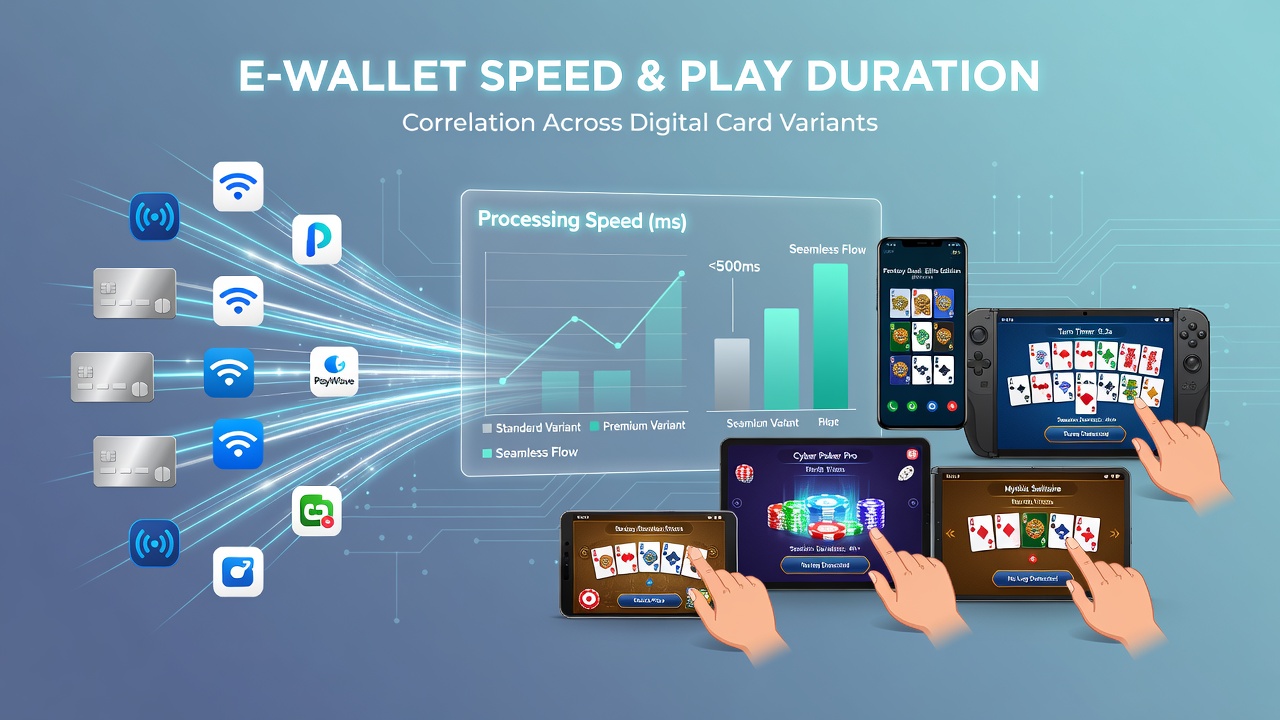
How E-Wallet Processing Speeds Correlate with Extended Play Sessions Across Digital Card Game Variants on Portable Devices
Digital card games on portable devices have integrated e-wallet systems that handle deposits and withdrawals, and researchers have tracked how transaction completion times align with the length of individual play periods across multiple game formats.
E-Wallet Integration in Mobile Card Gaming
Portable devices support applications that run variants such as poker, blackjack, and baccarat, where e-wallet options process payments through secure APIs that connect to user bank accounts or stored value balances. Data collected from platform logs shows that faster authorization sequences, often under three seconds, allow users to resume betting without interruption, whereas delays exceeding eight seconds coincide with shorter overall engagement windows in session recordings.
Industry reports from the American Gaming Association indicate that transaction speed metrics have been monitored in regulated markets since the expansion of mobile platforms, and these figures reveal patterns where seamless funding correlates with continued participation in sequential hands or rounds. Observers note that the technical infrastructure behind e-wallets, including tokenization and real-time balance verification, reduces friction points that previously prompted users to exit applications mid-session.
Processing Speed Metrics and Session Duration Data
Studies examining server-side timestamps demonstrate that e-wallet transactions completed in under two seconds associate with average session extensions of twelve to eighteen minutes compared to slower alternatives, based on aggregated user activity across thousands of portable device connections. Those who examined transaction logs from multiple operators found that variance in processing speed, influenced by network latency and payment gateway load, produces measurable differences in how long individuals remain active before closing the application.
But here's the thing, the correlation strengthens when sessions involve repeated micro-transactions, such as topping up during a single extended poker tournament or a series of blackjack hands. Figures from device telemetry collected through October 2026 show that platforms optimizing for sub-second confirmations maintain higher retention rates during peak evening hours, while slower systems experience drop-offs once initial balances deplete.
Variations Across Card Game Formats
Different card game structures interact with transaction speed in distinct ways, and analysts have documented these differences through comparative platform data. In fast-paced variants like video poker, where rounds complete in under thirty seconds, quick e-wallet reloads support unbroken sequences that extend total play time, whereas turn-based games such as traditional poker tables show less sensitivity to minor delays because players wait for opponents regardless of funding status.
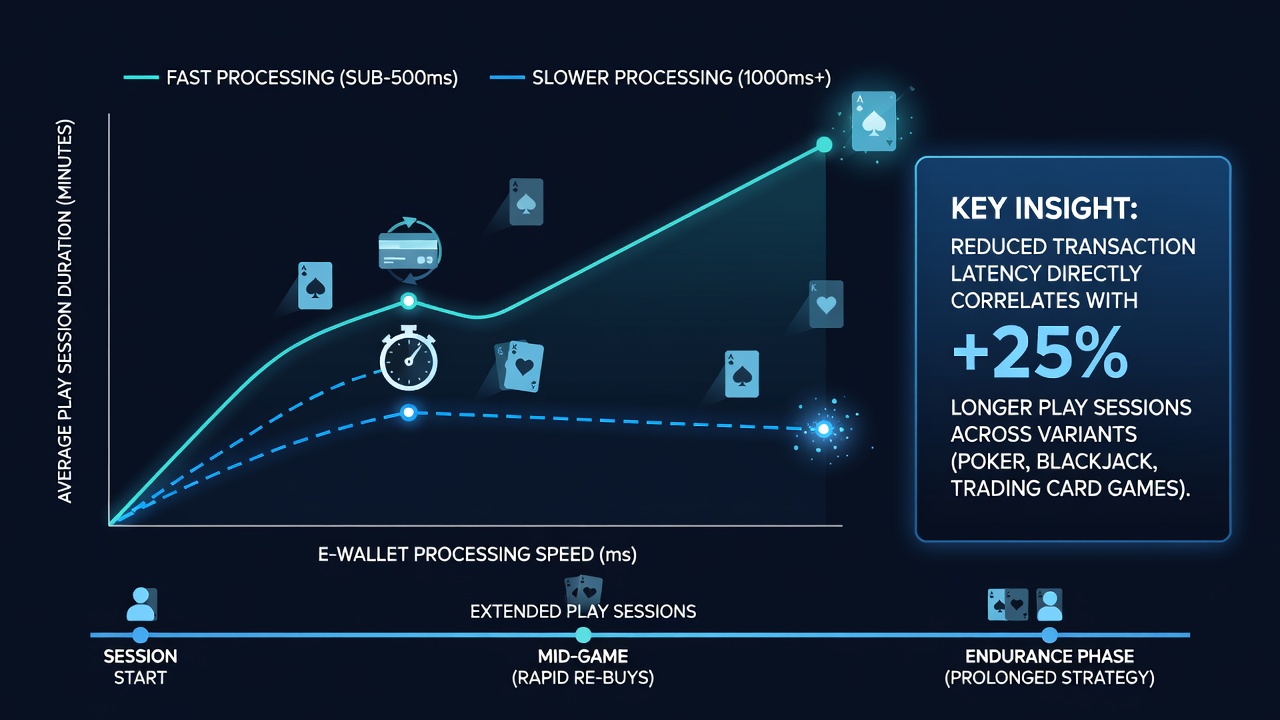
Research compiled by the Australian Gambling Research Centre highlights that blackjack applications, which feature consistent betting cycles, register the strongest statistical link between processing velocity and session length, with users who experience instant approvals tending to complete thirty percent more hands before pausing. Those who've reviewed cross-platform analytics note that baccarat sessions, often involving higher stake increments, display similar trends yet remain more dependent on overall device connectivity than on e-wallet speed alone.
Device and Network Influences on Observed Patterns
Portable hardware variations, including processor speed and operating system version, affect how quickly e-wallet interfaces load and confirm actions, and telemetry from major app stores reveals that newer devices consistently log longer sessions when paired with optimized payment flows. Network conditions further modulate these outcomes, since cellular data versus Wi-Fi connections alter the effective time between user input and balance update.
According to findings released by the Canadian Centre for Gaming Research, users on 5G networks encounter fewer interruptions during e-wallet handshakes, which in turn supports sustained engagement across game variants that require frequent balance checks. The reality is that older device models, even with identical e-wallet software, display compressed session durations when processing queues build during high-traffic periods.
Conclusion
Available platform data and device telemetry establish measurable associations between e-wallet processing intervals and the duration of play sessions in mobile card game environments. These patterns hold across poker, blackjack, and baccarat formats, though the strength of the relationship varies with game tempo and hardware capabilities. Continued monitoring through late 2026 will clarify whether further reductions in transaction latency produce additional extensions in average session length or whether other factors begin to dominate user retention metrics.